by Jiwan Singh
Developing environmentally- conscious habits begin with meaningful learning experiences. As part of Go Green SG 2026, Primary 4 students from Kheng Cheng School participated in the “Coding Food Saving Solutions with Micro:bits” programme, exploring the issue of food waste and working together to brainstorm innovative solutions.

Micro;bits coded by students
To bring the students’ ideas to life, they took part in hands-on STEM learning, an educational approach that integrates Science, Technology, Engineering, and Mathematics through hands-on, real-world problem-solving and project-based activities. Using the Micro:bit, a small, programmable microcontroller board, students developed future-ready digital skills while learning coding and electronics in a fun and accessible way. Working in groups, they conceptualised their solutions, before building innovative prototypes to test their solution for reducing food waste.
“Food waste is a daily reality that often goes unnoticed,” said Ms Jocelyn Tay Puay San, homeroom teacher for Primary 4.5. “I hope to raise awareness and inspire students to make more sustainable choices.”

Primary 4 students sharing their ideas with their teacher.

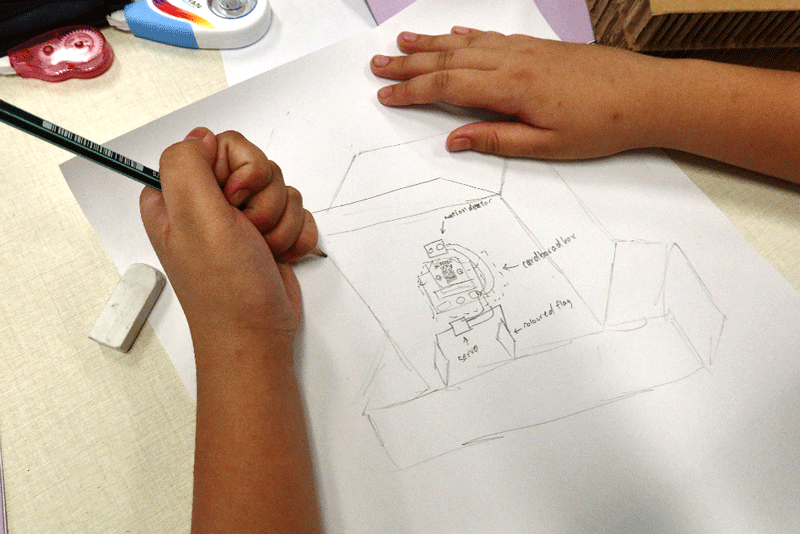
A student sketching out the group’s idea to tackle food waste
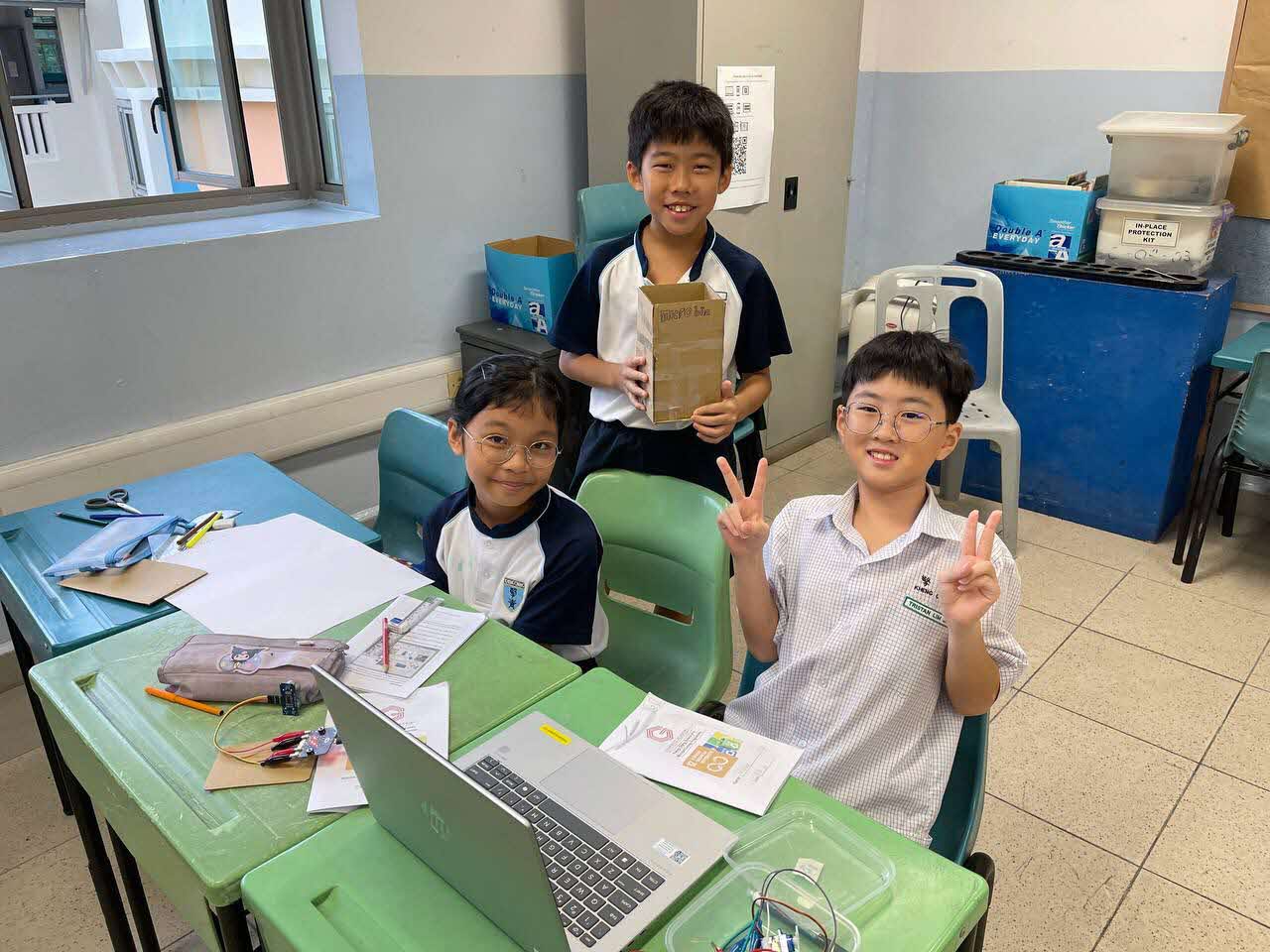
After finalising their designs on paper, students brought their ideas to life by first building cardboard prototypes. These prototypes let the students see how their ideas would work in real life, before they built the solutions using micro:bits.

Students crafting their prototypes
Students then worked in groups to program their Micro:bits, applying their newly acquired technical skills to write code to bring their designs to life. Testing and refining their programs, they continued making adjustments to ensure the Micro:bits worked properly.

Students coding their Micro: bits
The experience sparked conversations and reflections on food waste in Singapore among the students. “I have learnt that Singaporeans generated hundreds of thousands of tonnes of food each year and we should reduce it. We can use technology to invent solutions that address this issue and remind people the right thing to do,” said Liam Khanashat, from Primary 4.5.
The following day, Kheng Cheng School displayed the students’ prototypes to parents, teachers, and members of the public. Through presentations and demonstrations, students shared how their innovative solutions could help reduce food waste, reinforcing their learning while inspiring others within the community to adopt sustainable habits in their daily lives.

Students presenting their prototypes to members of the public during the Open House
The “Coding Food Saving Solutions with Micro:bits” programme gave students the opportunity to combine technology, creativity, and environmental awareness to address the issue of food waste. Through designing, building, and showcasing their solutions, students developed valuable coding and collaboration skills while gaining a deeper appreciation of sustainable, zero-waste living.